Blog
Explain Employment Gaps
How to Explain Employment Gaps on Your Resume (with Examples & Formatting Tips)

Updated on Feb 18, 2026
Employment gaps are normal, and when handled well, they can actually highlight your resilience and adaptability. Whether due to layoffs, caregiving, education, or personal reasons, breaks happen—and they don’t have to hold you back. Recruiters will notice the gap, but what truly matters is your framing: what you did with the time, what you offer now, and your readiness to contribute immediately.

Quick Rules of Thumb
- Be honest and concise. Recruiters don’t expect perfection, but they value transparency. Keep your explanation short and truthful.
- Frame your story clearly. Use one clear line in your resume to acknowledge the gap without over-explaining.
- Highlight progress. Certifications, freelance work, volunteer projects, or personal learning all count as career development.
- Respect your privacy. If you prefer not to share details, broad phrases like "family caregiving" or "personal reasons" are perfectly acceptable.
Should You Mention an Employment Gap on Your Resume?
Yes, if the gap is significant (6+ months), acknowledge it directly. Trying to hide employment gaps creates more questions than it answers.
Short gaps (a few months)
You can often skip them. Use years instead of months in your work history.
Longer gaps (6+ months)
Add a clear, brief entry so recruiters see transparency. One line is enough. Be honest, but don't overshare.
Career Break (2022-2023): Family caregiving and professional upskilling (completed Data Analytics certification).
Best Resume Formats for Employment Gaps
The right resume format helps you de-emphasize the gap while keeping your experience clear.
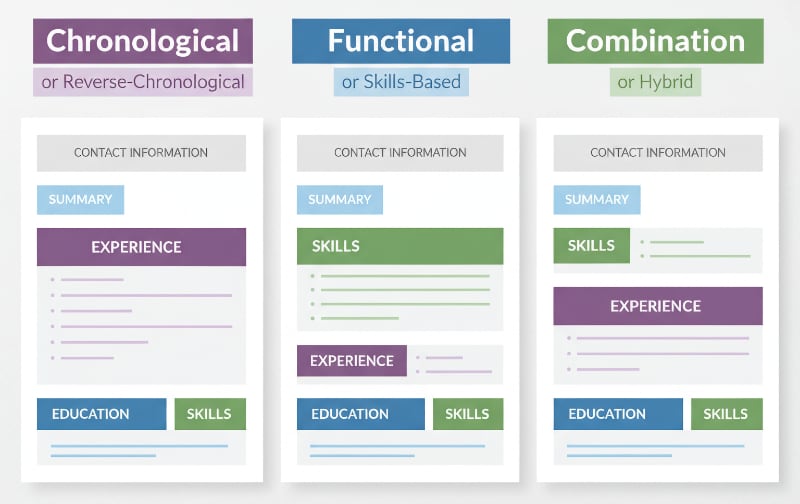
Chronological Resume Format (most common)
- Keeps jobs in order by date
- Works if your employment gap is explained briefly and your recent roles are strong
Functional Resume Format
- Focuses on skills and achievements rather than dates
- Useful for long or multiple employment gaps, but less favored by recruiters
Combination Resume Format (Recommended)
- Mix of chronological and functional formats
- Highlights skills and projects, while still showing timeline
- Best for showing that your career gap included relevant activity (courses, freelance, volunteering)

Pro Tip
Use years, not months. 2021–2023 looks cleaner than March 2021 – February 2023.
Resume Examples for Different Employment Gap Reasons
Here's how to explain employment gaps on your resume depending on your situation:
Caregiving Employment Gap
Career Break (2021-2022): Full-time family caregiving; completed online certification in project management.
Layoff or Downsizing Gap
Career Transition (2023): Company-wide restructuring; upskilled with advanced Excel course and freelance consulting.
Layoff or Downsizing Gap
Career Transition (2023): Company-wide restructuring; upskilled with advanced Excel course and freelance consulting.
Health-Related Employment Gap
Medical Leave (2022): Took time for personal medical recovery; now fully ready to return to full-time work.
Education and Upskilling Gap
Professional Development (2022): Completed Google UX Design Certificate; built portfolio with freelance projects.
Freelancing During Employment Gap
Independent Consultant (2021-2022): Delivered dashboards and reporting solutions to two clients; improved efficiency by 30%.
Relocation Employment Gap
Career Pause (2022): Relocated internationally; managed transition and completed LinkedIn Learning courses in data visualization.
Travel or Sabbatical Gap
Career Break (2019-2020): Global travel; strengthened cross-cultural communication and adaptability.
How to Make Employment Gaps Look Positive
Turn your career break into proof of growth and resilience. Highlight these activities during your employment gap:
- Certifications and courses (Coursera, LinkedIn Learning, bootcamps)
- Freelance or contract projects
- Volunteer work or leadership roles
- Portfolio development, GitHub projects, or case studies
- Publications, blogs, or side projects
Career Break (2022-2023): Completed AWS Cloud Certification and built portfolio projects for nonprofit organizations.
Common Employment Gap Mistakes to Avoid
When explaining employment gaps on your resume, avoid these mistakes:
- Leaving unexplained multi-year gaps
- Over-explaining with too much personal detail
- Using vague wording ("personal reasons") without any sign of growth
- Trying to hide dates by removing years (recruiters notice)
- Being dishonest about employment gaps (employers verify)
Employment Gap Resume Checklist
Follow this step-by-step checklist for handling employment gaps:
- 1Decide if your gap needs a resume entry (6+ months = yes)
- 2Write a one-line entry for the gap in Experience or Summary section
- 3Add proof of productivity: certificate, portfolio, volunteer project, or freelance work
- 4Consider a hybrid format if you want to de-emphasize dates
- 5Review your resume formatting to ensure consistency